
What Pet Owners Should Know About Heart Medications and How They Work
When your pet is diagnosed with heart disease, the medication list can feel overwhelming. Pimobendan, furosemide, enalapril, spironolactone… the names are unfamiliar, and suddenly you’re juggling multiple pills at different times of day. It’s completely normal to feel confused or even a little scared. You might be wondering: Will my dog still enjoy walks? Could my cat’s breathing actually get better? How will I know if these medications are working?
Here’s the encouraging news: modern heart medications can make a real difference in your pet’s comfort and quality of life. Understanding what each medication does and how they work together helps you feel more confident about your pet’s care, and it helps you recognize when things are improving or when it’s time to give us a call.
At Town & Country Animal Hospital in Athens, we’re committed to helping you understand every aspect of cardiac care. Our senior pet care services include detailed medication education where we walk through each drug, explain dosing schedules, and teach you what signs indicate medication adjustments might be needed. As an AAHA-accredited practice, we maintain high standards for client education because we believe informed pet owners make the best partners in care. Contact us anytime with questions about heart medications or your pet’s diagnosis. We want you to feel confident, not confused, about this important aspect of your pet’s health.
What Heart Conditions Require Medication?
Heart disease in pets takes many forms, and knowing your pet’s specific condition helps explain why certain medications are prescribed. Here’s a quick look at the most common conditions we see:
In dogs: Mitral valve disease is especially common in older, small-breed dogs like Chihuahuas and Cavaliers, and can lead to fluid buildup in the lungs and coughing. Dobermans are more prone to dilated cardiomyopathy, where the heart muscle weakens and stretches. Arrhythmias are more common in Boxers, while sick sinus syndrome (which affects the heart’s natural pacemaker) shows up frequently in Schnauzers. Heart tumors like hemangiosarcoma are more common in large breed dogs like Golden Retrievers and Shepherds.
In cats: Hypertrophic cardiomyopathy is the most common, where the heart muscle thickens and struggles to pump effectively. It’s more prevalent in Maine Coones. Cats with hyperthyroidism can also develop heart muscle thickening as a secondary problem. Felines can also develop murmurs, dilated cardiomyopathy, restrictive cardiomyopathy, and arrhythmias (irregular heart beats).
Some puppies and kittens are born with congenital heart disorders, such as patent ductus arteriosus, which may require surgery or lifelong medication.
The specific diagnosis guides which medications will help most, which is why accurate diagnosis matters so much.
How Do We Diagnose Heart Disease?
Getting the right diagnosis means we can choose the right treatment plan. We use several tools to get a complete picture of your pet’s heart health:
Echocardiograms use ultrasound to visualize heart structure, measure chamber sizes, assess how well valves are working, and evaluate pumping efficiency. Our ultrasound capabilities provide expert cardiac imaging, helping us see structural issues, enlarged chambers, and even masses within the heart.
Electrocardiograms (EKGs) record the heart’s electrical activity to identify rhythm abnormalities. This is especially important for pets with arrhythmias or fainting episodes.
X-rays show heart size and help us detect fluid in the lungs, which is a hallmark of congestive heart failure.
ProBNP blood testing looks for a marker that’s released when heart muscle is damaged, allowing for early detection of heart disease before symptoms appear.
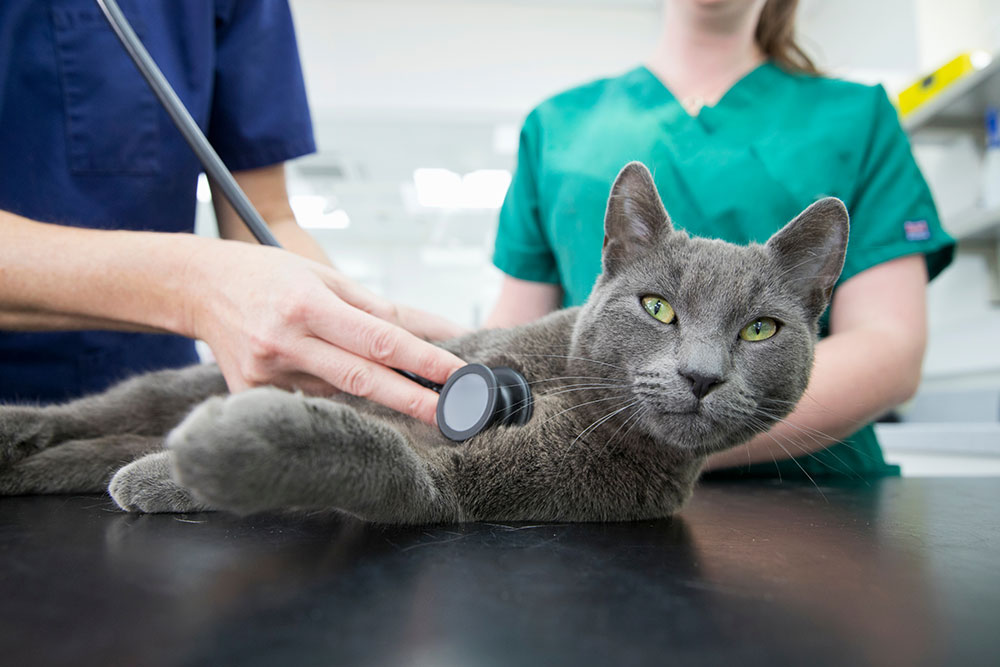
Physical examination includes listening with a stethoscope for heart murmurs, which are abnormal sounds that can indicate valve problems or other structural issues. We can also hear crackling or decreased lung sounds, signifying fluid buildup.
Our advanced diagnostics help us understand exactly what’s happening and monitor how well treatment is working over time. Senior pets should have exams every six months to catch problems early, while pets who have been diagnosed with heart disease may benefit from more frequent monitoring.
What Are the Early Warning Signs of Heart Disease?
Catching heart disease early gives us more options and often means better outcomes. The tricky part is that dogs and cats show very different signs.
In dogs, watch for heart disease signs like persistent coughing (especially at night or when lying down), slowing down on walks, tiring more easily, and reduced exercise ability. A dog who once loved long walks but now lags behind or asks to stop sooner is telling you something important.
In cats, the signs are often much subtler. Watch for hiding more than usual, breathing faster or harder at rest, and less interest in play or activity. Panting in cats is always abnormal and should prompt immediate veterinary attention.
If you notice these changes, schedule a cardiac evaluation. Early intervention can make a big difference in keeping your pet comfortable.
What Does Congestive Heart Failure Look Like?
Congestive heart failure happens when the heart can no longer pump effectively enough to meet the body’s needs. Fluid backs up into the lungs, abdomen, or both, causing serious symptoms that need prompt attention.
Warning signs that need immediate care:
- Resting breathing rate over 40 breaths per minute while sleeping
- Labored breathing or open-mouth breathing, especially in cats
- Coughing that worsens at night or when lying down
- Pale or blue gums indicating poor oxygen levels
- Weakness or collapse
- Distended abdomen from fluid accumulation
- Sudden appetite loss or weight changes
Respiratory distress with labored breathing, gasping, or extreme restlessness is always an emergency. If this happens during our business hours, call us immediately to prep us before you come in. For after-hours emergencies, we refer to Madison Veterinary Emergency- they are also open all weekend.
How Does Pimobendan Help the Heart?
Pimobendan is often the first medication prescribed for dogs with heart disease, and there’s good reason for that. It works in two ways: it helps the heart pump more effectively, and it relaxes blood vessels so blood flows more easily. This combination means the heart can do its job without working as hard.
For dogs with mitral valve disease or certain cardiomyopathies, pimobendan is a cornerstone therapy that improves comfort and can actually extend survival time. Some dogs start pimobendan before symptoms even appear if their heart is already enlarging on imaging. Cats may receive it in select cases, though it’s not appropriate for every feline heart condition.
What to expect: Most dogs take pimobendan twice daily on an empty stomach. You may notice better energy, easier breathing, and longer walks as the medication takes effect over days to weeks. Side effects are uncommon and usually mild, like softer stools or temporarily reduced appetite.
Medication counseling is part of our senior pet care services, which we recommend for all pets 7 years and older.
How Do Diuretics Remove Fluid Buildup?
When fluid accumulates in the lungs or abdomen, diuretics help the body get rid of excess water through increased urination. Think of them as helping drain the backup so your pet can breathe easier.
Furosemide is the most commonly prescribed diuretic and often provides relief within hours. Doses vary based on your pet’s size and disease stage, ranging from once daily to two or three times daily. Spironolactone is sometimes added for additional support, especially in more advanced cases.
Because diuretics can affect kidney function and electrolyte balance, we monitor bloodwork regularly. Our advanced diagnostics provide same-day results for most tests, so we can make adjustments quickly when needed.
What to expect at home: Your pet will urinate more frequently and may drink more water. Keep fresh water available at all times. If you notice lethargy, vomiting, reduced appetite, or breathing that’s getting worse rather than better, give us a call.
What Do ACE Inhibitors Do?
ACE inhibitors like enalapril and benazepril help relax blood vessels and reduce fluid retention, which lowers the workload on the heart. They’re often used alongside pimobendan and diuretics to provide more comprehensive support.
In dogs with heart failure, ACE inhibitors are a standard part of therapy. Cats may receive them too, particularly for systemic hypertension (high blood pressure) or certain valve diseases.
We check kidney function and electrolytes with regular bloodwork since these medications can affect both. Most pets tolerate ACE inhibitors very well, but if you notice dizziness, digestive upset, or weakness, let us know right away. Our AAHA accreditation reflects our commitment to safe medication management.
When Are Beta-Blockers Used?
Beta-blockers like atenolol help in specific situations, especially for cats with hypertrophic cardiomyopathy or pets with certain rhythm problems. By slowing the heart rate and reducing the force of each beat, they help the heart work more efficiently when it’s been working too fast or too hard.
These medications require careful dosing. Too much can cause excessive tiredness or abnormally slow heart rates. If your pet seems unusually weak or faint while taking a beta-blocker, contact us promptly.
Why Does My Pet Need So Many Different Heart Medications?
This is one of the most common questions we hear, and it’s a great one. Heart failure affects multiple body systems, so one medication rarely provides complete support. Each heart disease medication serves a specific purpose:
- Pimobendan helps the heart pump more effectively and relaxes blood vessels
- Diuretics remove excess fluid from the lungs and body
- ACE inhibitors lower blood pressure and reduce fluid retention
- Beta-blockers slow heart rate when needed for specific conditions
Together, these medications provide stronger, more balanced support than any single drug could alone. It’s like a team where each player has a specific role.
The combination often changes over time. Early disease may need fewer medications, while advanced stages typically require carefully coordinated combinations. Your feedback about how your pet is doing at home helps us fine-tune the plan.
How Do I Monitor My Pet’s Heart Health at Home?
Home monitoring is incredibly valuable and helps us catch problems early. Here’s what to track:
Counting resting breaths: Once daily while your pet is sleeping, count how many breaths they take in one minute. Under 30 is typical for most pets. If you consistently see rates over 40, or if breathing looks labored or involves belly effort, call us.
Weekly weighing: Sudden weight gain can indicate fluid retention, while rapid weight loss might mean too much fluid removal or reduced appetite. Either warrants a check-in.
Water and appetite: Keep fresh water available at all times since cardiac medications increase thirst. Watch for changes in appetite, which can signal medication side effects or worsening disease.
Activity level: Note whether your pet seems more or less comfortable, more or less willing to play or walk. These observations help us understand how well treatment is working.
Can My Pet Still Exercise with Heart Disease?
This might seem counterintuitive, but appropriate exercise can actually benefit pets with heart disease when done correctly. The key is matching activity to your pet’s specific condition and disease stage.
For dogs with early or well-managed disease, gentle regular activity helps maintain muscle tone, supports healthy weight, improves circulation, and enhances overall quality of life. Heart-healthy exercise might include:
- Short, leisurely walks at your dog’s pace
- Gentle swimming in warm water if your pet enjoys it
- Slow-paced play sessions that avoid overexertion
- Indoor activities on days when weather or symptoms make outdoor exercise difficult
The critical rule: Let your pet set the pace. Stop immediately if you notice fatigue, increased breathing, coughing, or reluctance to continue. Avoid strenuous exercise, hot or humid conditions, and activities that cause excitement or stress. Multiple short sessions often work better than one longer walk.
We’ll discuss safe exercise guidelines based on your pet’s specific condition at each recheck visit, adjusting recommendations as needed.
Frequently Asked Questions
Why is my pet suddenly breathing faster? Faster breathing at rest, especially over 40 breaths per minute while sleeping, often means fluid is building up. Count the breaths and call us if you’re concerned.
Do heart medications have to be given forever? Most cardiac medications are long-term, but dosing gets adjusted over time to maintain comfort with the fewest necessary medications.
What if I miss a dose? Give it when you remember if it’s within a few hours. Otherwise, skip that dose and continue the normal schedule. Don’t double up unless we specifically advise it.
Can diet help my pet’s heart? Yes! Balanced nutrition and sometimes specific cardiac diets can support heart health. We’ll guide you on what’s appropriate for your pet’s condition.
When do I need bloodwork? We typically check kidney values and electrolytes within 1 to 2 weeks of starting diuretics or ACE inhibitors, then at regular intervals. Our advanced diagnostics make this quick and convenient.
Your Partner in Cardiac Care
Heart disease is serious, but modern medications can help your pet breathe easier, feel better, and enjoy more good days at home. You don’t have to navigate this alone.
We know multiple medications can feel overwhelming. Our team is here to explain each one, answer your questions, and provide support at every step. From diagnosis through ongoing monitoring and dose adjustments, we’re committed to keeping your pet’s treatment plan practical and effective.
If you have questions about your pet’s cardiac diagnosis, need help organizing medications, or want us to take another look at symptoms, please contact us– we’re here to help. Our AAHA-accredited team offers comprehensive support including advanced diagnostics, cardiac ultrasound, and compassionate senior pet care services. Let’s work together to help your pet feel their best.





Leave A Comment