
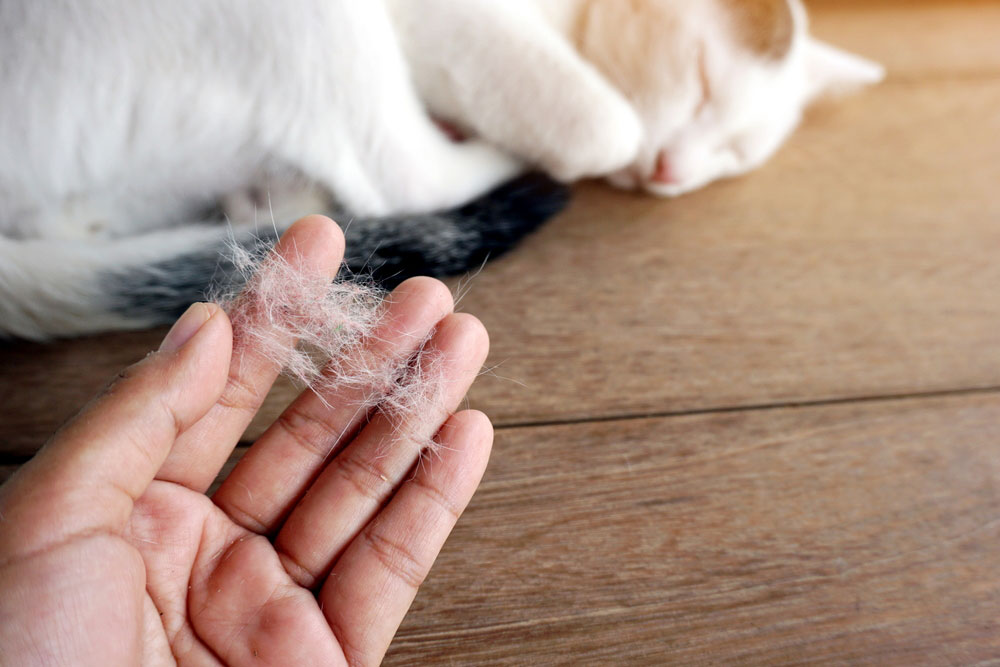
Running your hand over your dog or cat and noticing a thinning patch of fur can raise a lot of questions. It is natural to start wondering “is this normal?” right away. Is this seasonal shedding, stress, allergies, or something deeper going on? Hair loss can have many causes, ranging from common skin issues to internal conditions that affect the body more gradually over time. Because different problems can look surprisingly similar on the surface, a careful veterinary evaluation is often the best way to understand what your pet’s coat is trying to tell you.
Understanding the cause matters, because the treatments are entirely different- and the sooner the problem is identified, the sooner your pet starts feeling better. We’re an AAHA-accredited practice built on the belief that pet owners deserve to leave every appointment with a clear understanding of what’s happening and a confident path forward. Our advanced diagnostics, including in-house lab work and digital imaging, support a thorough approach to hair loss workups that doesn’t leave questions on the table. Contact our team to schedule an evaluation.
Is Your Dog or Cat’s Hair Loss Something to Worry About?
You notice it while your dog stretches out in the sun: a patch near the hip where the hair looks thinner than it used to. Or your cat has been obsessively grooming, and now there’s a smooth, nearly bare strip running along her belly. Hair loss shows up in a lot of different ways, and the confusion is completely understandable when you’re not sure whether to act on it or wait it out.
Alopecia is the medical term for hair loss, and it’s a symptom, not a standalone disease. Something else is causing it, whether that’s the immune system, the skin itself, a hormonal imbalance, or even emotional stress. The first job is figuring out which.
Not every coat change is cause for concern. Seasonal shedding is normal: it’s diffuse, the coat still looks reasonably full, and the skin underneath looks healthy. What warrants a vet visit is something more specific:
- Defined bald patches or localized thinning that isn’t seasonal
- Hair that stops regrowing or comes back with a different texture
- Redness, scaling, flaking, or crusting on the skin
- Scratching, licking, or chewing that keeps returning to the same spot
- Symmetrical thinning on both flanks, the tail, or along the neck with little to no itch
If any of those apply to your pet, a proper evaluation makes a lot more sense than waiting to see what happens. Our wellness visits include a full coat and skin assessment, which helps catch problems earlier than most owners notice them on their own.
When Allergies Are the Root Cause
Allergies are one of the most frequently seen drivers of hair loss in dogs and cats, and they can be genuinely frustrating to deal with because they tend to cycle: flare up, settle, and flare again. The hair loss itself isn’t caused directly by the allergy; it’s caused by what the pet does in response to the itch. Scratching, licking, and chewing damage hair follicles and break the skin barrier, which is what creates the bald spots.
Atopic dermatitis is an allergic skin condition triggered by environmental exposures like pollen, mold, dust mites, and grasses. It’s one of the more common allergies seen in dogs, and affected animals typically show inflamed skin on the belly, inner thighs, paws, and ears, often paired with recurring ear infections. Food proteins like chicken, beef, dairy, and wheat can produce a similar picture and are best identified through a structured elimination diet.
Cats handle allergies differently. Rather than scratching visibly, they often overgroom, sometimes so quietly that owners don’t connect the behavior to the hair loss until a significant bald patch has already appeared.
It’s also worth noting that flea allergy dermatitis is especially relevant here in North Alabama. The warm, humid climate means flea pressure exists well beyond the summer months, and in a flea-allergic pet, even a single bite can trigger an intense local reaction. The classic pattern is hair loss over the rump, tail base, and inner thighs. You don’t need to find a flea on your pet for this to be happening.
If your pet’s skin flares repeatedly, scheduling an appointment for a full allergy workup is the most efficient path to real answers. To help soothe itchy skin, check out our pharmacy for products like Douxo Calm Shampoo, DermAllay Oatmeal Shampoo, and EpiSoothe– they all have ingredients meant to calm sensitive, inflamed skin and relieve the itch.
Parasites and Infections: What’s Living on Your Pet’s Skin?
Some of the most common causes of hair loss are too small to see without magnification, which is part of why owners are often caught off guard.
Mites are a good starting point. Demodex mites live in hair follicles and are actually present on most dogs at low levels without causing problems. In young dogs with still-developing immune systems, or in adults that become immunocompromised, those populations can explode. The result is patchy hair loss, typically starting around the face, muzzle, and paws, and it’s usually not very itchy, which surprises a lot of owners.
Sarcoptic mange is the opposite: intensely itchy, with crusting and hair loss focused on the ears, elbows, and belly. It spreads easily between dogs and can temporarily cause itchy red bumps in people in the same household.
Fleas, even if not a true “flea allergy”, can also cause itching so intense your pet will start to lose hair. Year-round parasite prevention is one of the most practical things you can do to eliminate flea-related hair loss from the equation entirely, and we carry a full selection of flea and tick preventives to help you stay ahead of it. Many modern flea and tick preventives also take care of mites- ask us what we recommend for your pet. You can check out our online pharmacy to find the brands that we trust for dogs and cats. Our grooming services also include flea treatments, along with bathing.
Bacterial and fungal infections are also worth understanding. When the skin barrier breaks down from inflammation or repeated trauma, the microorganisms that normally live on the surface can overgrow, creating a cycle where itch causes damage, damage allows overgrowth, and overgrowth worsens the itch. Ringworm is a fungal infection that causes circular, scaly bald patches and is contagious to both other pets and people, making prompt treatment important for the whole household.
Could Hormones Be Behind the Hair Loss?
When a pet’s coat thins gradually and symmetrically, affecting both sides of the body evenly, the hormonal system is often involved. These changes develop slowly enough that they can be easy to attribute to aging, which is part of why they can progress further than they should before getting attention.
Thyroid and Adrenal Conditions: What to Know
Hypothyroidism occurs when the thyroid gland doesn’t produce enough hormone to keep metabolism running normally. In dogs, this typically presents as a dull, thinning coat on the trunk and tail, along with weight gain, low energy, and cold intolerance. It’s most common in middle-aged dogs and is very manageable with daily oral medication once confirmed on bloodwork. In cats, hyperthyroidism is more common than hypothyroidism and typically causes a patchy, poorly groomed coat paired with weight loss and a noticeably increased appetite.
Cushing’s disease involves excess cortisol production and looks quite different. Dogs with Cushing’s often develop a pot-bellied appearance, drink and urinate more than usual, pant excessively, and have thin, fragile skin alongside hair loss along the flanks.
Why Blood Work Is Part of the Picture
Hormone imbalances frequently show up in blood work before they become visually obvious, which is one of the reasons routine wellness bloodwork is genuinely useful even in pets that seem perfectly healthy. Our in-house lab can run thyroid panels, cortisol levels, and chemistry profiles, giving us a detailed snapshot of what the endocrine system is doing and a clear baseline for comparison over time. This is all part of the advanced diagnostics capability that supports thorough workups for these cases.
Overgrooming, Stress, and Pain: The Less Obvious Causes
Not every case of hair loss starts in the skin or the endocrine system. Pets, especially cats, often respond to emotional distress or physical pain through repetitive grooming that creates smooth, thinning areas over time.
Psychogenic alopecia is the term used when overgrooming has a behavioral origin rather than a medical one. One distinguishing feature is that the skin underneath typically looks completely normal, with no redness or crusting. Feline life stressors such as a new pet in the home, a household move, changes in routine, or conflict with other cats are common triggers. Dogs can develop a related habit in the form of a lick granuloma, where repeated licking of one spot on a leg or paw creates a wound that perpetuates the cycle.
Pain is a less obvious but important driver. A cat dealing with discomfort from feline idiopathic cystitis may lick the lower abdomen bald without any visible skin issue. A dog managing osteoarthritis may obsessively lick or chew a sore joint until the hair in that area noticeably thins. Because stress-driven and pain-driven grooming look identical from the outside, diagnostics are the only reliable way to tell them apart.
We offer laser therapy as a non-invasive treatment option for pain and inflammation, which can be an important part of the care plan when pain is identified as a contributing factor.
Is Your Pet’s Hair Loss Written Into Their DNA?
Sometimes hair loss isn’t caused by allergies, parasites, or hormones at all. Some dogs are simply born predisposed to certain coat conditions, and knowing your breed’s tendencies can save a lot of diagnostic time and help set realistic expectations for management.
A few conditions worth knowing:
- Color dilution alopecia affects dogs with diluted coat colors, including Dobermans, Weimaraners, and Italian Greyhounds. Coat thinning typically begins early in life and tends to be progressive.
- Flank alopecia produces well-defined seasonal bald patches on the sides of the body and is most commonly seen in Boxers, Bulldogs, and Airedales. It tends to recur at the same time each year.
- Sebaceous adenitis destroys the oil-producing glands in the skin, leading to scaling, dullness, and progressive hair loss. Standard Poodles are particularly predisposed.
- Zinc-responsive dermatosis causes crusting and hair loss around the face and muzzle in northern breeds like Siberian Huskies and Alaskan Malamutes.
These conditions are diagnosed after ruling out other causes first, and management typically centers on supportive skin care, nutritional supplementation, and occasionally light therapy. Full regrowth isn’t always possible, but coat quality and comfort can usually be improved meaningfully with the right plan in place.
Does Your Pet’s Diet Affect Their Coat?
The skin and coat are often the first place nutritional shortfalls become visible. Hair growth requires a steady supply of protein, essential fatty acids, zinc, and biotin, and when any of those are inadequate, the coat tends to look dull, sparse, or brittle before other signs appear.
If coat quality has been a recurring issue and diet might be a factor, nutritional counseling is a straightforward way to evaluate whether a dietary adjustment could help. We carry a range of skin and coat support diets for dogs and for cats in our online pharmacy, as well as skin and coat supplements with omega fatty acids to support coat health between visits.
What to Expect During a Hair Loss Workup
Walking in for a hair loss appointment doesn’t have to feel like a mystery. Here’s how the process typically unfolds:
- History-taking. When the hair loss started, whether it’s getting worse, if your pet seems itchy, any changes in diet or household routine, and whether anyone else in the home has been affected.
- Physical exam and pattern mapping. Distribution provides strong diagnostic clues. Symmetrical, non-itchy loss on both flanks points toward hormones. Patchy loss with scaly edges suggests a fungal or parasitic cause. Thinning over the rump raises flea allergy as a strong possibility.
- In-house testing. Skin scrapings for mites, cytology for bacterial or yeast involvement, and hair shaft examination.
- Fungal culture. When ringworm is suspected, results take seven to fourteen days for accuracy.
- Blood work and endocrine panels. Thyroid, cortisol, and chemistry panels when hormonal conditions are on the list.
- Allergy evaluation. Elimination diets for suspected food reactions, typically eight to twelve weeks on a novel or hydrolyzed protein, or environmental allergy testing.
Having an in-house lab means many of these results come back the same day, keeping the diagnostic process moving efficiently.
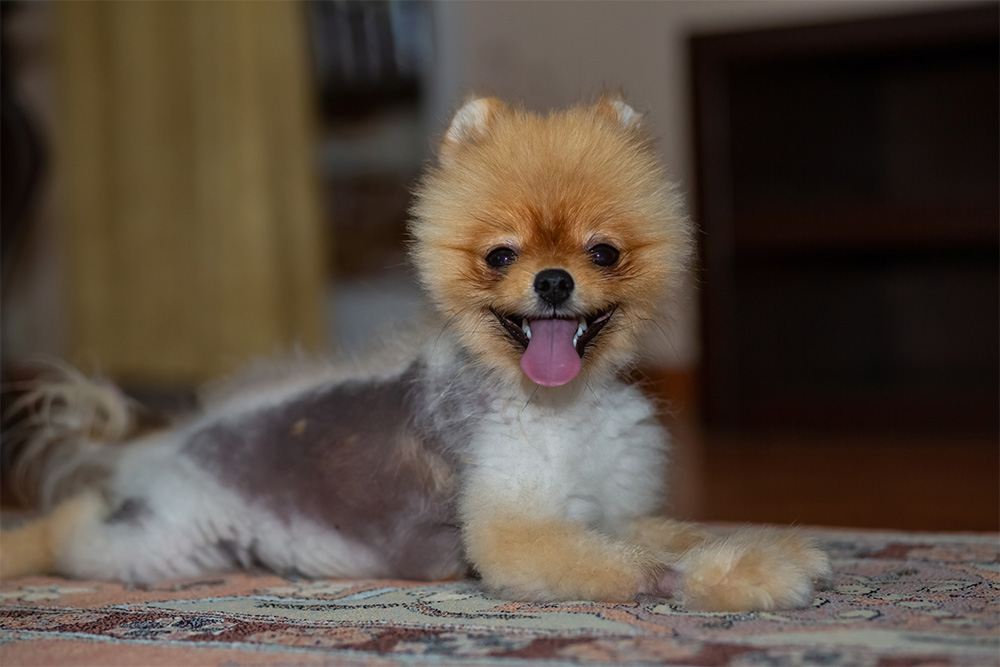
How Is Pet Hair Loss Treated?
Because so many different conditions can cause alopecia, there’s no single treatment that works across the board. Management is always matched to the specific diagnosis.
- Allergies: Anti-itch medications, omega-3 supplementation, medicated topical products, dietary adjustment, and in some cases immunotherapy
- Parasites: Prescription preventives targeting the identified parasite, plus environmental decontamination where needed
- Infections: Antibiotic or antifungal therapy guided by cytology and culture
- Hormonal conditions: Thyroid supplementation, Cushing’s protocols, or surgical intervention, with regular bloodwork to fine-tune treatment
- Pain or stress-related grooming: Pain management (including laser therapy), environmental enrichment, behavior modification, and calming support as appropriate
- Nutritional deficiencies: Dietary changes, targeted supplementation, and grooming adjustments
Follow-up appointments allow us to confirm regrowth is progressing, adjust medications if needed, and catch secondary issues before they become more complex.
Frequently Asked Questions About Pet Hair Loss
Can my pet’s hair loss spread to my family? Most causes of alopecia are not contagious. The two exceptions are ringworm, which is a fungal infection transmissible to people and other pets, and sarcoptic mange. Both respond well to treatment, and prompt care protects the whole household.
When does hair loss go from normal to something I should have checked? Schedule a visit if you’re seeing actual bald patches rather than general shedding, if the hair loss is spreading or not regrowing, if the skin looks red or scaly, if your pet is scratching or licking intensely, or if other changes have appeared such as weight gain, increased thirst, or a drop in energy.
Getting Your Pet Back to a Healthy Coat
Most cases of hair loss improve significantly once the right diagnosis is made. Whether your pet is scratching constantly, quietly thinning without obvious discomfort, or showing the even, symmetrical changes that suggest something hormonal, there is a clear path forward.
Our goal is to make sure you walk out of every visit with a full understanding of what’s happening and a concrete plan for what comes next. No question is too small, and no coat change is too minor to bring up. We’re also available for your grooming needs, including bathing and flea treatments.
If you’ve noticed something off about your pet’s coat, contact us to schedule an appointment. We’re here to help you figure it out.



Leave A Comment