
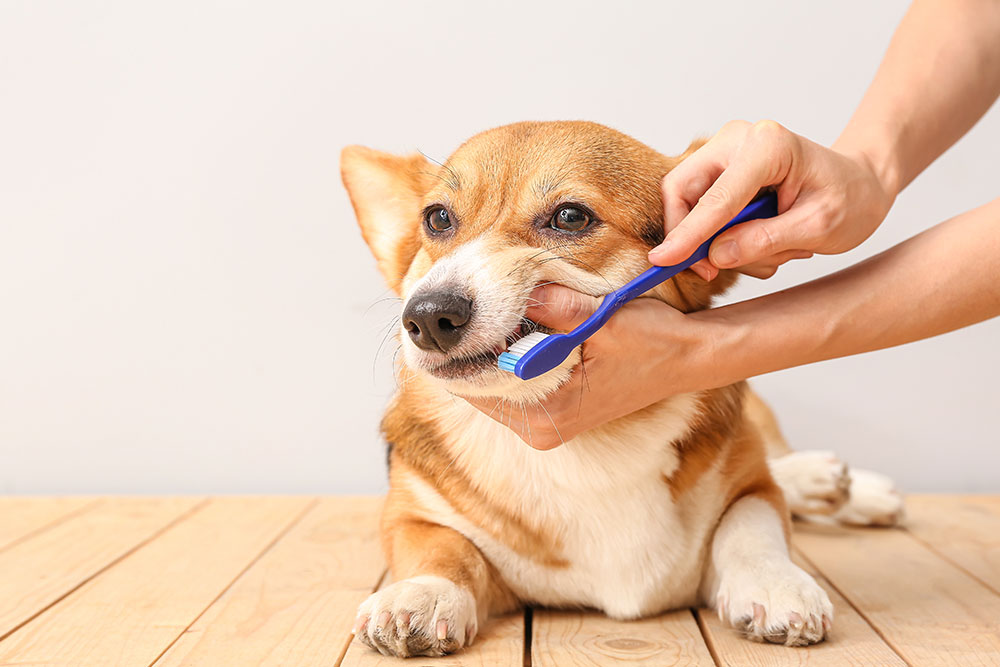
Brushing your pet’s teeth sounds simple in theory. The reality is very, very different. You gather your supplies with confidence, call your pet over in your sweetest voice, and within seconds they vanish, suddenly convinced this is the worst idea you’ve ever had. Cats become liquid and slip through your arms. Dogs turn their heads with impressive determination. Somehow, what should take 30 seconds turns into a wrestling match.
Despite the daily struggle, home dental care matters more than most pet owners realize. Plaque builds quickly, and without regular attention it hardens into tartar that can lead to gum disease, pain, and even infections that affect the heart and kidneys. Pets are experts at hiding discomfort, so dental disease often goes unnoticed until it is advanced. A few minutes of effort at home can make a meaningful difference in long-term health, fresher breath, and overall comfort. Even if the process is not perfect, consistency goes a long way, and your pet benefits from every small win.
At Town & Country Animal Hospital in Athens, AL, dental health is a priority across every life stage, from puppy and kitten wellness through our dedicated senior pet care services. Our AAHA-accredited team can review your pet’s current oral health and help you build a home care plan that fits your pet’s personality and your schedule. Reach out to us to get started.
How Does Dental Disease Take Hold in Your Pet’s Mouth?
Periodontal disease follows a predictable progression: plaque forms, hardens into tartar within days, irritates the gum tissue, and eventually leads to infection, bone loss, and tooth loss. By the time visible tartar or bad breath is noticeable, the disease process is already well established below the gumline.
This matters beyond the mouth. Periodontal bacteria entering the bloodstream have been linked to long-term changes in cardiac, kidney, and liver tissue. Daily home care disrupts plaque before it can mineralise, slowing the progression between professional visits. Our dental care services include thorough cleanings and oral assessments that give home care the best possible starting point, and our wellness visits include dental monitoring at every appointment.
Toothbrushing: The Best Option When You Can Get It
Why It Works
Brushing physically disrupts plaque before it hardens, and nothing else available for home use matches it for effectiveness. Daily brushing provides the highest level of protection. Every-other-day brushing still delivers real benefit. A consistent imperfect habit beats an abandoned perfect one every time.
How Do You Introduce Brushing Without a Struggle?
Slow introduction is the key to long-term brushing tolerance. Cooperative care training uses consent-based, reward-driven steps that prevent the negative associations that make brushing a battle.
A step-by-step introduction:
- Touch the muzzle and gently lift the lip for a few seconds, offering a treat reward each time
- Run a finger along the outer tooth surfaces at the gumline, keeping sessions brief
- Add toothpaste on your fingertip and let your pet taste it before any brushing begins
- Use a finger brush or soft-bristled brush starting only at the front teeth
- Extend gradually toward the back molars over days or weeks, always stopping before resistance builds
For dogs, effective brushing technique involves a 45-degree angle at the gumline with short circular or horizontal strokes, focusing most attention on the upper back premolars and molars where tartar accumulates fastest. Brushing a cat’s teeth works best with a smaller brush, lighter pressure, and very brief sessions rather than one extended attempt. Never use human toothpaste, as fluoride and xylitol are toxic to pets. Our team can demonstrate technique at your next visit.
Alternatives When Brushing Is Not Realistic
Dental Wipes
Dental wipes provide friction-based plaque removal using a finger-applied wipe rather than a brush. They clean outer tooth surfaces effectively and are significantly better than nothing for pets who resist a brush. Compared to brushing they have specific tradeoffs:
- What works well: outer tooth surfaces, easier introduction for resistant pets, no learning curve
- Limitations: don’t reach gumlines or back molars as well as brushing, less effective at disrupting subgingival plaque
Used consistently alongside an enzymatic product, they provide real benefit.
Enzymatic Products
Enzymatic gels, powders, and sprays target bacterial biofilm chemically without requiring mechanical scrubbing. They can be applied with a finger, mixed into food, or sprayed directly, and many require no rinsing. Dental Care Powder added to food daily is one of the easiest options for pets who resist anything directly in the mouth. Combining enzymatic products with wipes or brushing produces better results than either approach alone.
Water Additives
Water additives deliver antimicrobial ingredients passively through drinking. It’s a low-effort way to add a layer of protection for pets who resist any direct oral contact. A few practical points:
- Introduce gradually at low concentration to confirm your pet keeps drinking normally
- Provide a plain water bowl alongside any additive water during the introduction phase
- Best used as a supplement to other care rather than as a standalone method
Ask our team for guidance on what combination of products best suits your pet.
Dental Diets and Chews
Dental diets formulated for oral health use a larger kibble size that promotes mild abrasive cleaning as teeth penetrate the food before it crumbles. Some also contain ingredients that slow tartar mineralisation. Our pharmacy carries both dog dental diets and cat dental diets for pets whose oral health would benefit from dietary support.
Chewing physically scrapes plaque from tooth surfaces and contributes meaningfully when the right options are chosen. The simple test: press your thumbnail into the chew. If you cannot leave an indentation, it is too hard and risks cracking teeth. Items to skip entirely include antlers, hooves, hard nylon, and raw bones. Safe chew toys flex under pressure. A textured dental chew toy with surface features that reach between teeth provides genuine plaque benefit. Our pharmacy has edible dog dental chews and treats that combine mechanical cleaning with enzymatic action, and satisfy your dog’s urge to chew.
The VOHC Standard: Cutting Through the Marketing Noise
VOHC-accepted products carry a seal from the Veterinary Oral Health Council, an independent organisation that reviews clinical trial data before granting recognition. Only products that demonstrate measurable plaque or tartar reduction in controlled studies earn the seal. When you are choosing chews, water additives, diets, or gels, the VOHC seal provides reliable evidence that the product does what it claims. Not every great product has the VOHC seal, but it’s an easy way to weed out marketing hype from proven brands. Our pharmacy has a full range of vet-trusted dog dental products and cat dental products to round out your home care kit.
What Do Professional Cleanings Accomplish That Home Care Cannot?
No amount of diligent home care removes tartar that has already mineralised onto teeth, and it cannot reach the subgingival (below the gumline) areas where the most serious periodontal disease develops. Procedures performed without full anesthesia address only visible surfaces and provide no diagnostic imaging of roots and bone, leaving significant disease untouched while creating the appearance of cleaner teeth. Proper anesthesia with complete monitoring allows thorough cleaning, probing, and radiographic assessment, the work that actually prevents tooth loss and systemic effects.
Town & Country Animal Hospital’s AAHA accreditation means our dental protocols, anesthesia standards, and monitoring practices are evaluated against national benchmarks.
How Do You Make Dental Home Care a Daily Habit?
The most effective dental routine is the one that fits into real life. Practical strategies that improve consistency:
- Pair dental care with something you already do every evening so it doesn’t get skipped
- Keep supplies in a visible, convenient spot
- Have a backup plan: on days when a full brushing isn’t going to happen, use a chew or add dental powder to the food bowl
- Involve all household members so the routine holds even when schedules vary
Inconsistency doesn’t mean failure; it means finding the combination that works for your household.
Warning Signs That Mean a Dental Visit Shouldn’t Wait
Home care reduces the pace of disease, but it doesn’t stop it entirely. Knowing which signs to act on between scheduled visits keeps small problems from becoming bigger ones.
Contact us if you notice:
- Bad breath that is noticeably worse or has a sweet, foul, or metallic quality
- Yellow or brown deposits building up on the teeth, especially near the gumline
- Red, swollen, or bleeding gums at any point
- Pawing at the mouth, excessive face rubbing, or chattering of the jaw
- Reluctance to eat hard food, dropping food, or chewing only on one side
- Visible tooth damage, including chips, fractures, or dark discoloration
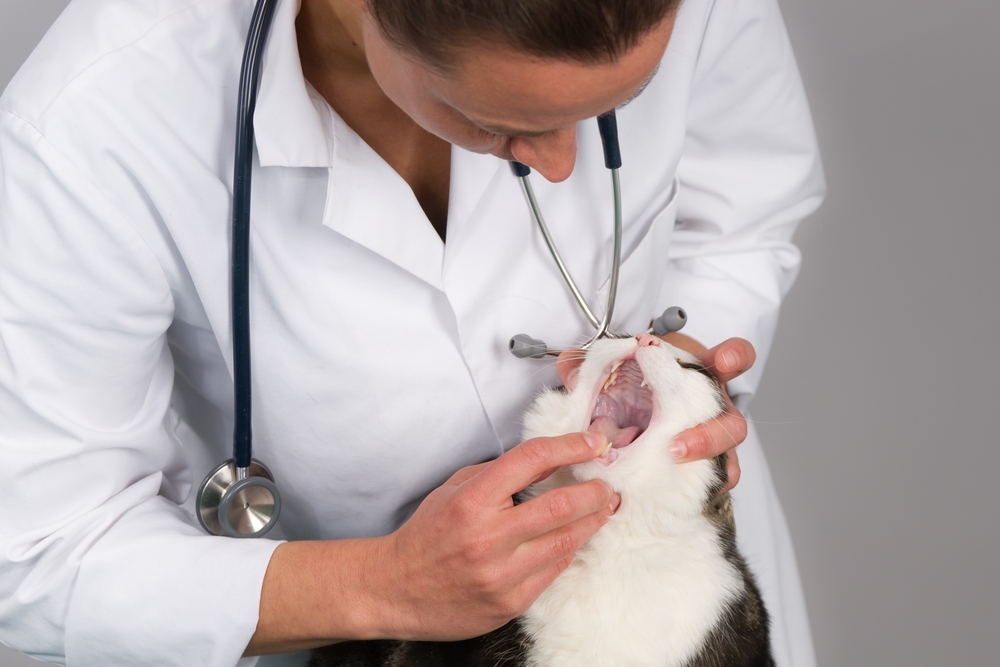
Cats in particular mask oral pain well. A cat that keeps eating may still be in significant discomfort. Signs like changes in grooming habits, choosing wet food over dry, or reduced social interaction can all reflect dental pain that has gone unaddressed for a long time. If something seems off, a dental check is worth scheduling even if the next routine visit is months away.
Frequently Asked Questions About Dental Home Care
How do I know if my pet’s home care is working?
Fresher breath, pink healthy gums, and slower tartar accumulation between professional cleanings are all signs that home care is helping. Our team tracks changes at each visit.
My pet is older and has never had dental care at home. Is it too late to start?
It is never too late to add home care. Older pets benefit just as much as younger ones, and our senior pet care services are designed to address dental health as part of the broader picture of ageing.
My pet was diagnosed with stomatitis. Can home care still help?
Stomatitis is a severe inflammatory condition affecting the entire oral cavity and requires professional management beyond standard home care. Depending on your pet’s specific case, home care may still play a supportive role, but treatment typically involves prescription medications and often extractions. Our team will advise on what is realistic and helpful for your individual pet’s situation.
How long before I see results from home dental care?
Fresher breath can improve within a few weeks of consistent care. Slowing tartar accumulation is visible over months when compared to previous dental cleanings. Home care is a long-game investment. The benefit builds over years of consistent effort rather than showing dramatic overnight results.
Are dental chews enough on their own?
Chews help and are better than nothing. They work best as part of a broader routine that includes enzymatic products or brushing.
My cat refuses everything. What now?
Water additives and enzymatic products added to food are often the most achievable options for cats who reject all direct handling. Our team can help you identify what your specific cat is most likely to tolerate.
How often should my pet have a professional cleaning?
This depends on your pet’s breed, age, and individual dental health. Most dogs and cats benefit from annual cleanings, though some need more frequent visits. Our wellness exams include dental assessments that guide timing recommendations.
A Partner in Your Pet’s Long-Term Dental Health
Town & Country Animal Hospital is here for the whole picture, from early prevention through ongoing care. Consistent home care, combined with regular professional cleanings, is the most effective approach available for protecting your pet’s teeth and overall health. Contact our team to schedule a dental check-up or discuss the home care options that make the most sense for your pet.




Leave A Comment