
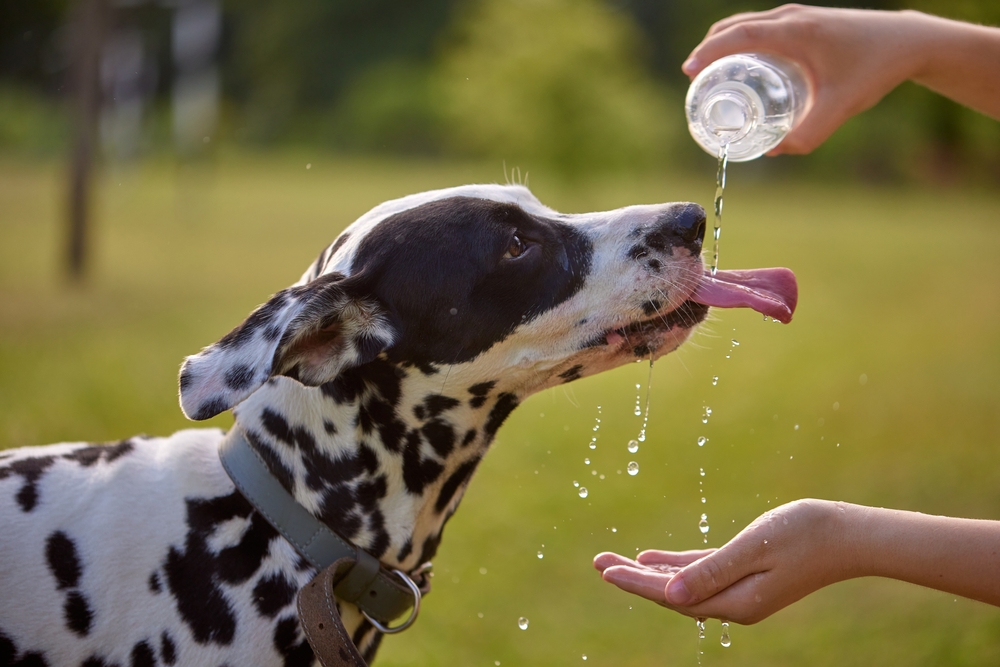
Heat stroke wrecks a pet’s organs within minutes because once internal temperature climbs past about 105 degrees, the proteins running the kidneys, liver, gut lining, and clotting cascade start to unravel all at once. Cooling that begins in your kitchen or driveway buys back ground that care started after a twenty-minute drive cannot. Soaking the belly, groin, and paw pads with cool tap water and pointing a fan at the wet fur pulls heat out of the body faster than ice packs, and far more effectively than skipping at-home first aid altogether.
Town & Country Animal Hospital in Athens is ready to take an overheated dog or cat straight in the second you arrive, and our in-house lab lets us check kidney values, electrolytes, and clotting times while a patient is still being actively cooled. We see emergencies during regular hours and keep walk-in slots open for cases that cannot wait. If you suspect heat stroke is unfolding, begin cooling at home and call us right away to say you’re on the way so a team is waiting at the door. If you’d like to prevent a heat scare before it starts, schedule a summer wellness exam to go over your pet’s breed and health risks that might make them more susceptible to an Alabama heat wave.
Heat Stroke: The Short Version
- Heat stroke is a true emergency where a pet’s body temperature climbs high enough to start damaging organs, and every minute of delay makes recovery harder.
- Cooling that starts at home with cool tap water and airflow, then continues on the drive in, gives your pet a real head start before you ever reach us.
- Flat-faced breeds, heavy-coated pets, puppies, kittens, seniors, and overweight animals overheat the fastest and need the most careful summer planning.
- A pet that seems to bounce back after cooling can still develop kidney, liver, and clotting problems over the next few days, so veterinary monitoring matters even when things look fine.
Which Signs Mean Your Pet Is Overheating Right Now?
Heat stroke announces itself in stages, and catching the early ones is what saves a pet. The early warning signs of overheating run in a predictable order: relentless panting and thick, ropey drool come first, then bright red gums, glassy eyes, stumbling, and eventually collapse. The trouble is that pets push through those early signs, so it falls to you to notice the shift.
Cats show it differently. A panting cat is already a red flag, since cats rarely pant unless they’re truly struggling.
| Stage | What you might see | What it means |
| Early | Heavy nonstop panting, thick drool, restlessness, seeking cool floors | The body is working overtime to dump heat; act now |
| Middle | Bright or brick-red gums, glassy eyes, wobbling, vomiting or diarrhea | Temperature is climbing into dangerous territory |
| Severe | Collapse, disorientation, seizures, pale or bluish gums | Organs are at risk; this is a life-threatening emergency |
If you’re seeing anything in the middle or severe column, start cooling and head in. Don’t wait to see whether it passes.
What Should You Do the Moment You Realize Your Pet Is Overheating?
The first move is to stop the heat from climbing: get your pet out of the sun and into shade or air conditioning, then begin cooling right away while someone calls ahead. Offer small sips of cool water if your pet is alert, but never pour water into the mouth of a wobbly or unresponsive pet. Then start wetting the areas where heat leaves the body fastest.
The safest emergency steps for cooling start with cool or tepid tap water over the paws, belly, and armpits plus a fan or AC for airflow, never ice, an ice bath, or a wet towel draped over the whole body. Ice and ice water actually backfire: they clamp down the surface blood vessels that need to stay open to carry heat away, and a soaked towel laid over the body traps heat like a blanket.
- Move to cool air: Get into shade, an air-conditioned room, or in front of a fan first.
- Wet the right spots: Soak the belly, groin, armpits, and paw pads with cool or tepid tap water, then keep air moving over the wet fur.
- Offer, don’t force, water: Let an alert pet take small sips; never force water on a groggy one.
- Skip the ice: No ice baths, no ice packs, no towels draped over the whole body.
- Don’t overcool: Stop active cooling once your pet perks up and starts to settle; overshooting into hypothermia brings its own problems.
For anything severe, call our team for emergency care right away and keep the cool-down going on the drive in; calling ahead means a team is ready when you arrive.
How Does the ER Treat Heat Stroke, and Why Does the Risk Linger After?
Hospital care for heat stroke works on three fronts at the same time: bringing the temperature down in a controlled way, replacing the fluid volume the body has lost, and staying ahead of the complications that follow. The reason we move fast is simple. The first 24 hours carry the highest risk of death, and a pet who looks stable can turn quickly.
Once a pet reaches us, in-hospital heat stroke treatment adds the tools you can’t offer at home: temperature checks every few minutes so active cooling stops before it overshoots, IV catheters that restore blood flow to the kidneys and gut, and medications ready the moment vomiting, seizures, or heart rhythm changes appear. We handle emergency and urgent care during our regular hours; after hours, head toward the nearest overnight veterinary ER.
Here’s the part that catches families off guard: the danger doesn’t end when your pet cools down and perks up. A pet can look bright and stable an hour after cooling and still slide into organ damage after a heat event, with the kidneys, liver, heart, and gut all vulnerable over the following 24 to 72 hours. Systemic inflammation, dehydration, and internal bleeding can all surface after the crisis seems to have passed.
Among the most dangerous of those delayed problems is abnormal blood clotting, where the body burns through the proteins that let it clot and begins to bleed internally. That is exactly why monitoring matters even when a pet seems fine, and why a short stay for observation is worth it. Rechecking organ values with same-day in-house lab work catches a kidney or clotting problem while it’s still fixable rather than after it has taken hold.
What Makes Pets Cross the Heat Threshold Sooner Than We Do?
Pets cross the heat threshold sooner because they can’t sweat the way people do, so hot, sticky air overwhelms their cooling fast. Flat-faced breeds, thick or dark coats, very young and senior pets, and those carrying extra weight or heart and airway conditions all start summer at a disadvantage.
A dog sheds heat mostly by panting, moving hot air out and cooler air in, with only a little help from sweat glands in the paw pads. Cats pant far less and lean on grooming and finding a cool spot. Neither system keeps up once the air turns hot and humid. Flat-faced breeds like Bulldogs, Pugs, and Persians move far less air with each pant, which is why brachycephalic thermoregulation hinges so heavily on staying at a lean, healthy body condition.
Because the risk is so individual, cooling plans should be too. A checkup is the natural place to sort out where a pet lands on the spectrum of heat risk, and annual wellness exams are where that conversation fits.
How Can You Protect Your Pet From the Heat All Summer Long?
Preventing heat stroke comes down to keeping your pet ahead of the heat instead of reacting to it, and most of that work is small and routine. Steady water, planned shade, and honest limits on outdoor time do far more than any single gadget. The goal is to never let your pet get close to the edge in the first place.
Everyday hydration and cooling habits do most of the prevention work: fresh water everywhere, a portable bottle for outings, chill mats and damp towels to lay on at home, and shade breaks taken before your pet ever starts to pant hard. Treat that first hard panting as your cue to stop, not a sign to push on.
Outdoor activity calls for the same discipline. Most of preventing heat stroke on hot days is timing and restraint: walk at dawn or dusk, dial exercise intensity down, keep paws off scorching pavement, and end play the moment your pet lags behind or seeks shade. Press the back of your hand to the sidewalk for seven seconds; if you can’t hold it there, it’s too hot for paws.
Then there’s the one that takes lives every single summer: the parked car. On an 85-degree day a closed car can climb past 120 degrees in under half an hour, and hot vehicles take pets’ lives every year even with a window cracked. There is no safe version of leaving a pet in a car in warm weather, not for a quick errand, not with the windows down. The simplest rule stands: leave your pet home where it’s cool. If your pet was in a hot car, don’t wait to see how they do. Call us for triage instructions while you start cooling.
Cats and Homebound Pets: Comfort on the Hottest Days
Keeping cats and homebound pets cool means combining a comfortable environment with quiet activities that don’t spike their body temperature. Outdoor cats have their own set of needs, and even fully indoor pets can overheat in a stuffy room on a hot afternoon. A little planning keeps everyone settled through the worst of the day.
Outdoor cat summer safety comes down to several shaded water bowls refreshed often, a ventilated shelter or safe enclosure, and a cool retreat your cat can reach during the hottest hours of the afternoon. Supervised yard time or a screened catio lets a cat enjoy the season without baking in the midday sun.
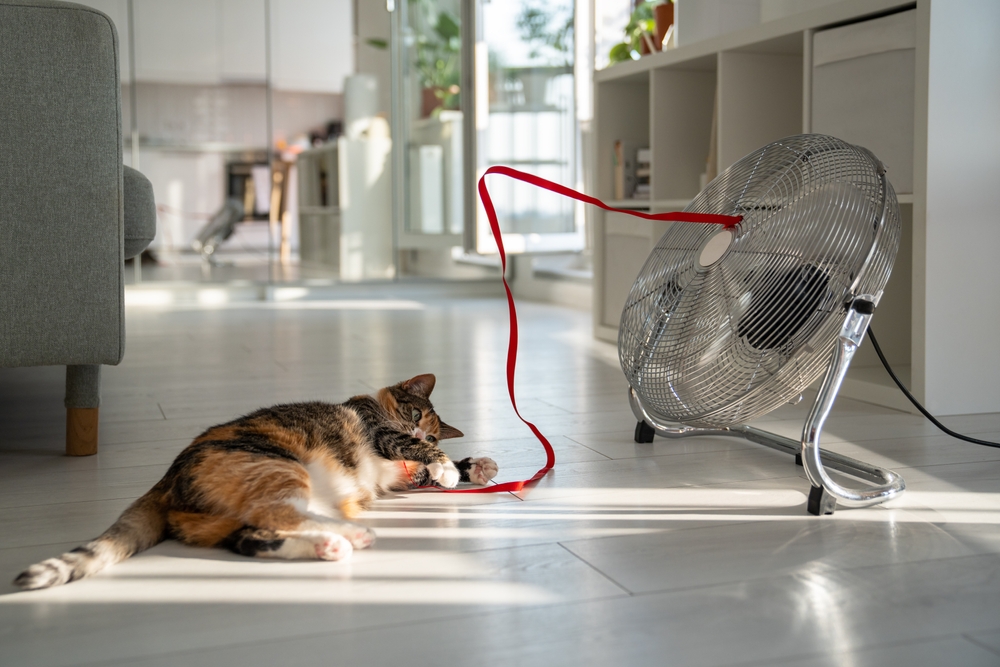
Indoors, the basics matter most: air conditioning or fans, access to cool tile or a shaded room, and plenty of fresh water. When it’s too hot to be outside, low-energy indoor games keep dogs and cats engaged and content without the risk that comes from a full romp in the yard. A frozen treat puzzle or a snuffle mat scattered with kibble is easy to make, and homemade enrichment toys give a pet plenty to think about while the afternoon heat peaks.
Heat Stroke in Pets: Answers to Common Questions
How fast can heat stroke happen?
Heat stroke can take hold faster than most families expect. A dog exercising hard on a hot, humid day can reach a dangerous temperature in fifteen to thirty minutes, and a pet shut in a parked car can get there even sooner. Puppies, kittens, seniors, flat-faced breeds, and overweight pets cross the line quickest. Because there’s so little warning, prevention and quick recognition matter far more than any treatment you can do at home.
My pet cooled down and seems fine now. Do we still need to come in?
A pet who cooled down and seems fine now still needs a call to us. Looking better on the outside doesn’t mean the inside has settled. Heat stroke can quietly damage the kidneys, liver, and clotting system over the next one to three days, and those problems are far easier to manage when we catch them early. A quick exam and some lab work tell us whether your pet needs monitoring or is truly in the clear.
Is cool water or ice water better for cooling a pet?
Cool or tepid tap water is the better choice, never ice. Ice and ice-cold water tighten the blood vessels near the skin, which actually traps heat inside and slows cooling down. Cool water over the belly, groin, armpits, and paw pads, paired with a fan or air conditioning, pulls heat away far more effectively. Skip the ice bath and the soaking-wet towel draped over the body, both of which can make things worse.
Your Partner for a Cooler, Calmer Summer in Athens
Heat stroke is a genuine emergency, but it’s also one of the most preventable ones out there. Early recognition, quick cooling, and a few smart routines around water, shade, and timing keep summer fun instead of frightening. Trust your gut when something looks off, and act before the panting turns into staggering.
Summer safety planning and emergencies are handled with the same care right here in Athens, held to the hospital-wide protocols and equipment checks that our AAHA accreditation requires and only a few exceptional practices meet. If the heat has your pet in trouble, reach out to our team the moment you suspect overheating and start cooling while you head our way.



Leave A Comment