
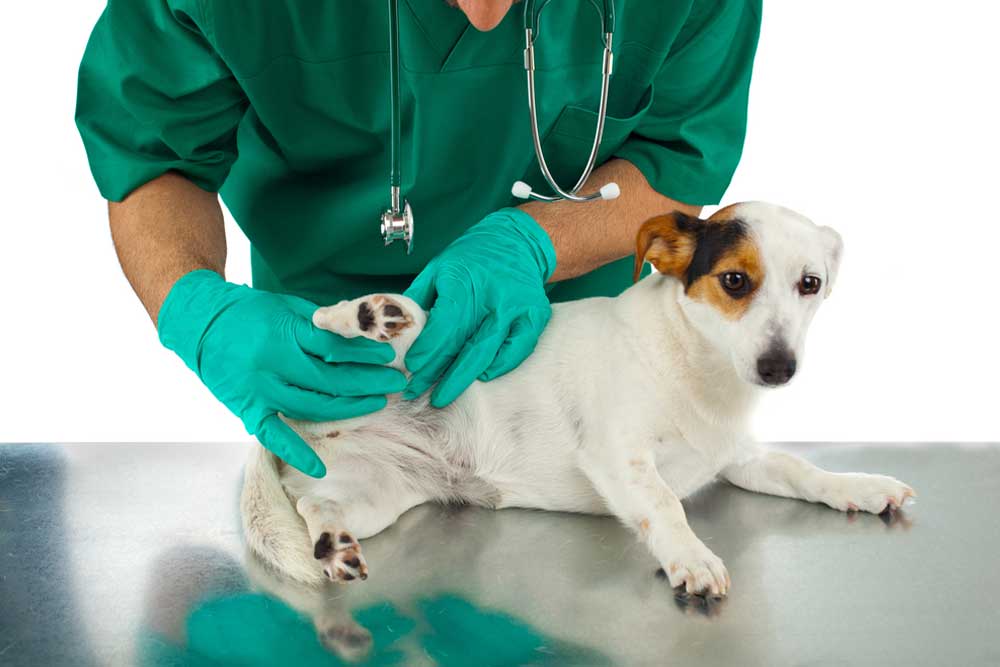
Most dogs and cats walk comfortably again after hip surgery, and that holds across a wider set of procedures than many families realize. A total hip replacement gives the joint a new mechanical ball and socket and can return close-to-normal movement; a femoral head ostectomy (FHO) removes the painful ball so muscle and fibrous tissue carry the load instead, an approach that suits cats and smaller dogs especially well; and juvenile procedures can steer a young, growing dog’s hips toward better mechanics before arthritis ever takes hold. How complete the comeback looks depends on matching the procedure to your pet’s size, age, and underlying condition, and on the weeks of controlled recovery that follow. Surgery is also never the opening move: it earns its place after medication, weight management, and activity changes stop being enough, and many pets stay comfortable on that plan for years.
Bring us every question on your list, because Town & Country Animal Hospital in Athens holds itself to a simple standard: you leave your appointment with answers, not lingering questions. We take the X-ray views that show how much the hip has changed, explain the findings in plain language, and perform orthopedic surgery in-house when that is the right call for your pet. If the better answer is a different procedure or no operation at all, we will say so and explain why. Ask us your questions, starting with the one that brought you here.
Hip Surgery: What to Know
- Hip disease is highly manageable, and surgery only enters the conversation once medication, weight control, and activity changes stop keeping your pet comfortable.
- FHO removes the painful ball of the joint and works beautifully for cats and smaller dogs, while total hip replacement rebuilds the joint with implants and suits larger, more athletic patients.
- The right choice depends on your pet’s size, age, and underlying condition, not on which surgery sounds more advanced.
- Recovery is where good surgeries are won or lost, so the weeks of controlled rest and rehab that follow matter as much as the operation itself.
Which Pets End Up Needing Hip Surgery in the First Place?
Most pets who reach a surgical conversation share one of four underlying problems: hip dysplasia, a traumatic hip dislocation, Legg-Perthes disease, or advanced arthritis. Surgery is rarely where their story starts; nearly all of them try medication, weight management, and rehab first.
When conservative care stops holding the line, the specific diagnosis shapes which surgery makes sense.
- Developmental in dogs: Canine hip dysplasia develops when the ball and socket grow at mismatched rates, leaving the hip loose and unstable and setting the stage for arthritis that worsens with age. Large and giant breeds such as German Shepherds, Labradors, Golden Retrievers, and Rottweilers top the list, though any breed can be affected.
- Developmental in cats: Feline hip dysplasia is easy to miss because cats rarely limp the way dogs do, quietly cutting back on jumping or grooming instead. Maine Coons and other large breeds are over-represented, which is why early screening for at-risk pets is worth the effort.
- Traumatic: A hip luxation is the one road to hip surgery that arrives without warning, usually when a car strike or hard fall pops the femoral head out of its socket. Luxations are also more common in pets with hip dysplasia. If the ball can’t be guided back into place and kept there without an incision, surgery becomes the answer.
- Vascular: Legg-Perthes disease sets in when the femoral head loses its blood supply and slowly crumbles from within, and while small-breed dogs are the classic patients, cats can develop it too. Because the bone itself is dying, surgery to remove the damaged head is usually what finally ends the pain.
- Degenerative: Severe hip osteoarthritis in dogs and cats becomes a reason to consider surgery once daily pain no longer responds to medication and rehab, and in cats it often surfaces as reluctance to jump rather than a visible limp.
For breeds with a known hip risk, routine wellness exams and early screening let us catch a loose joint before it turns into a painful one.
When Is Surgery Not the Answer at All?
For many pets, especially early in the disease or when signs are mild, a well-built conservative plan keeps them comfortable for years without an operation. Non-surgical management isn’t the consolation prize; it’s the right first move for most hips, and often the only move a pet ever needs. A strong plan pulls several levers at once.
- Medication: Anti-inflammatory pain relief is the backbone of daily comfort, and monthly injectable pain medications for arthritis are now available for both dogs and cats. We tailor the choice to your pet after an exam.
- Joint support: Joint supplements for orthopedic conditions can calm inflammation and support cartilage health.
- Weight and body condition: Keeping a pet lean is one of the most powerful things a family can do for sore hips, and pet obesity prevention resources make the target weight concrete.
- Rehabilitation: Veterinary physical rehabilitation rebuilds the strength and range of motion around a painful hip, and it does as much heavy lifting here as it does after an operation.
- Comfort therapies: Laser therapy can ease inflammation and soreness as a complement to the rest of the plan.
Home matters too. Ramps in place of jumps, runners over slick floors, a soft orthopedic bed, and raised food bowls all take pressure off tender joints. When a South Athens summer afternoon turns hot and sticky, shifting walks to the cooler ends of the day keeps a stiff pet moving without asking too much of them.
What Is an FHO, and Which Pets Does It Suit Best?
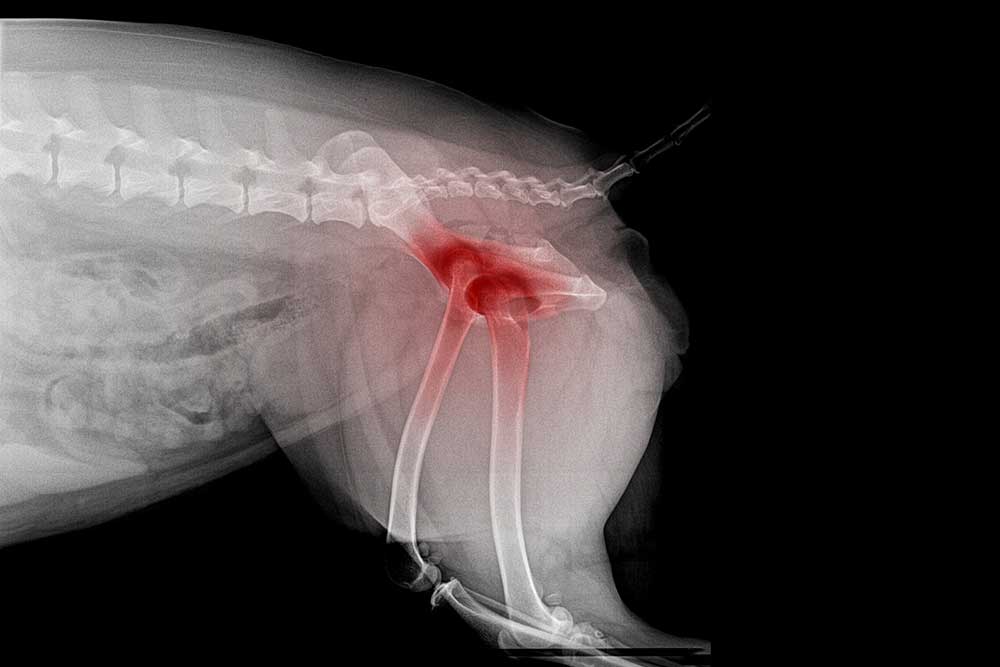
A femoral head ostectomy removes the ball at the top of the thigh bone so it can no longer grind against a damaged socket, and the body fills the gap with scar tissue that forms a functional false joint. It’s a pain-relief operation more than a mechanical rebuild, and for the right patient, that trade is well worth making.
With no bone-on-bone joint left, the hip moves a little differently afterward. Range of motion narrows slightly and some pets keep a subtle change in stride, but the grinding pain is gone.
Who tends to be a great FHO candidate:
- Smaller dogs: Lighter body weight means the fibrous false joint carries a manageable load.
- Cats of most sizes: Feline patients do particularly well, often returning to jumping and climbing.
- Young pets with Legg-Perthes: Removing the collapsing femoral head resolves the pain at its source.
- Pets where a replacement isn’t feasible: When cost, implant sizing, or other health issues rule out a replacement, an FHO is a reliable fallback.
The false joint only works if the muscles around the hip are strong enough to stabilize it, which is why recovery isn’t something to coast through. Rehabilitation, gentle range-of-motion work, and progressive activity over roughly six to twelve weeks are what turn the surgery into a comfortable dog or cat. Cats often need a nudge here, since their instinct is to hide and rest rather than move; short, encouraged activity sessions keep that hip working while it heals.
What Is a Total Hip Replacement, and Who Is It For?
A total hip replacement swaps out both the femoral head and the socket for prosthetic implants that restore near-normal joint mechanics. Unlike an FHO, it rebuilds the joint rather than removing it.
That rebuild is what makes it the better fit for bigger, busier patients: a working Labrador or an athletic large-breed dog puts more force through the hip than a false joint can comfortably absorb. Cats can be candidates too, at specialty centers with appropriately sized implants, though it’s less commonly needed for them than for large dogs.
Total hip replacement tends to be the right call for:
- Larger and heavier dogs: Body weight that would overload a false joint is handled well by implants.
- Athletic and working dogs: Pets whose jobs or lifestyles demand full, durable function.
- Pets where normal function is the goal: Families who want the closest thing to an original, pain-free hip.
Recovery asks for patience and a strict rulebook. During the eight-to-twelve-week healing window, activity restriction is not a suggestion; jumping, running, stairs, and slick floors are all off-limits while the implant settles into the bone. For cats, that means blocking access to the usual vertical launch pads, since a leap onto the counter at week three can undo careful surgical work. Most patients return to full, comfortable function once that period is behind them.
FHO or Total Hip Replacement: How Do the Two Compare?
Neither is universally better; each wins for a specific kind of patient.
| Factor | FHO | Total Hip Replacement |
| What happens to the joint | Ball removed; scar tissue forms a false joint | Ball and socket replaced with implants |
| Best-suited patient | Cats and smaller dogs | Larger, athletic, or working dogs |
| Joint mechanics afterward | Good pain relief, slightly altered gait | Near-normal, restored mechanics |
| Recovery timeline | About 6 to 12 weeks, rehab-driven | 8 to 12 weeks of strict restriction |
| Long-term function | Very good in light-framed pets | Excellent, close to original |
| Relative cost | Lower | Higher |
A ten-pound terrier and an eighty-pound retriever with the same diagnosis often walk away with different recommendations, and that’s exactly how it should be.
Should My Puppy Be Checked for Hip Dysplasia Before Symptoms Start?
For the right puppy, yes, and earlier than most families expect. An early hip evaluation with X-rays can catch loose hips while the skeleton is still growing, which is exactly when the widest range of hip dysplasia treatment options is still open. A few things should prompt that early look:
- Breed: Labs, Golden Retrievers, German Shepherds, Rottweilers, and other large and giant breeds carry the highest risk, especially if a parent had hip trouble.
- A fast-growing frame: Puppies who shoot up quickly put extra stress on soft, still-forming joints.
- Gait quirks: Bunny-hopping when running, a lazy or sideways sit, or reluctance to jump can be early whispers of loose hips.
- Simple peace of mind: Wanting to be proactive is reason enough in a high-risk breed, even when nothing looks wrong.
Hip laxity at this age rarely causes obvious limping, so screening is the only way to catch it. That’s why early puppy and kitten visits are where at-risk pups get flagged in time: catching laxity at sixteen weeks opens doors that are firmly shut by the time a dog is a year old.
Can the Right Puppy Food Really Lower the Risk of Hip Problems?
It can, and for at-risk breeds it’s one of the few levers a family fully controls. Rapid weight gain and over-supplementation stress developing joints, while steady, controlled growth gives the hips their best shot at forming well. A puppy fed the right food and kept lean through the growth phase and beyond may never need hip surgery at all.
Steering at-risk breeds toward large-breed puppy formulas is one of the clearest ways to lower the odds of developmental orthopedic conditions later on. They slow growth to a healthier pace and balance the minerals that bone development depends on, and resisting the extra scoop matters just as much as the bag you buy. Our team can develop individualized nutrition plans that match the food and portions to your dog as they grow.
What Surgeries Can Reshape a Puppy’s Hips Before Arthritis Starts?
Puppies diagnosed with significant hip laxity have two time-sensitive surgical options that older dogs don’t, and both work only within narrow windows while the skeleton is still growing.
- Juvenile pubic symphysiodesis (JPS) is a minimally invasive procedure for puppies diagnosed before about twenty weeks of age; it fuses part of the pelvis so the hip sockets rotate into a tighter fit as the rest of the pelvis grows.
- A pelvic osteotomy (TPO or DPO) serves slightly older young dogs, usually under a year, whose hips are loose but not yet arthritic; the surgeon cuts and rotates the pelvic bones so the socket covers the femoral head more fully.
Both aim at the same goal, a snug hip that never develops the grinding looseness arthritis feeds on, and both close as options once the bones mature.
How Do We Help Families Decide What Is Right?
We begin with a thorough orthopedic exam and the hip X-ray views that reveal how far the joint has progressed and rule out other sources of pain, all in one visit.
From there, the conversation is honest and unhurried. We lay out every reasonable option, from conservative care to FHO to referral for a total hip replacement, and we tell you which one we’d choose for your pet and why. When the best answer is a specialty procedure we don’t perform on-site, we coordinate that referral and stay involved in the plan. Either way, you sit down with your veterinarian to weigh what fits your pet, your household, and your goals, and we handle the pain management and rehab guidance on both sides of any surgery.
Hip Surgery in Dogs and Cats: The Questions We Hear Most
How long before my pet is back to normal after hip surgery?
Most pets are noticeably more comfortable within a few weeks, but full recovery takes longer. An FHO usually asks for about six to twelve weeks of rehab-focused healing, while a total hip replacement requires eight to twelve weeks of strict activity restriction before a return to full function. The biggest factor in a smooth recovery is following the restriction and rehab plan closely, even when your pet feels good and wants to do more than they should.
Is my cat too small or too old for hip surgery?
Size and age rarely rule out surgery on their own. FHO suits cats especially well precisely because their light frames handle a false joint so easily, and healthy older cats can be excellent candidates once we confirm the rest of their health checks out. What matters more than the number on the scale or the calendar is your cat’s overall condition and muscle strength, which we assess during the exam.
Will my dog need surgery on both hips?
Not always: even when both hips show changes on an X-ray, many dogs only ever need one side addressed, because the more painful joint is usually the one holding your dog back. We treat the hip that’s limiting your dog, then watch the other one over time. If the second hip becomes a problem down the road, we can plan for it then, and plenty of dogs live comfortably for years with only one hip ever operated on.
We’re Here When You’re Ready to Talk Hips
A hip diagnosis can feel like a decision you have to make today, but it almost never is. The right answer for your pet may look nothing like the right answer for another dog or cat with the same X-ray. Our job is to give you a clear picture and enough understanding to feel settled about whatever comes next, whether that’s a watchful conservative plan or a surgery date.
When you’re ready to talk it through, Town & Country Animal Hospital in South Athens is here. Reach out to schedule a visit, and we’ll start with the question that’s been on your mind. For an urgent injury like a suspected dislocation, call us right away; we provide urgent care during our regular hours, and after hours your nearest veterinary emergency hospital is the fastest path to help.


Leave A Comment